Reviewing the Love You Daddy Father’s Day Design
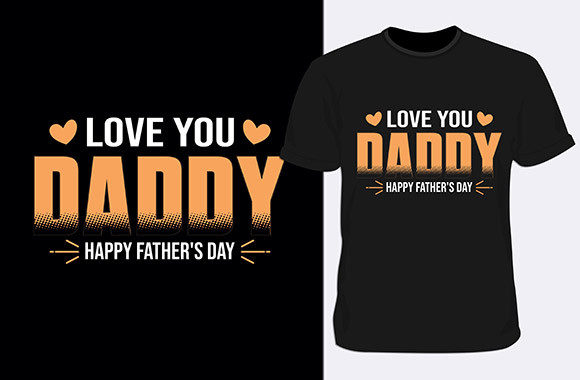
As a designer who spends more time staring at stitch simulations than actual fabric, I have learned that not every cute graphic translates well to thread. When I first pulled up the Love You Daddy Happy Father s Day Tshirt design, my initial reaction was one of cautious optimism. It is a sentiment-heavy piece, relying on typography and emotional resonance rather than complex illustrative details. For embroidery professionals and small business owners, this distinction is critical. We are not just selling a image; we are selling a tactile experience. The question is always: will this look as good on a sweatshirt as it does on a screen?
First Impressions and Visual Personality
The mood of this design is warm, nostalgic, and deeply personal. It fits squarely into the category of holiday embroidery, specifically targeting the spring rush for Father’s Day. Visually, the layout appears balanced, with a clear hierarchy that guides the eye. For those of us working in T-Shirt Designs and Graphics, we know that clarity is king. If the message gets lost in poor digitizing or low-resolution assets, the product fails.
This particular asset offers a mix of file types, including PNG, AI, EPS, and SVG. From a workflow perspective, having the Adobe Illustrator CS6 versions is a significant advantage. It means we can tweak the vector paths before converting them into a machine embroidery design. This flexibility allows us to adjust kerning or simplify shapes if the original lines are too tight for a satin stitch or too dense for a fill stitch. The transparent PNG is useful for quick mockups, but serious production work requires the editable vectors to ensure clean lines.
Real-World Application: The Custom Sweatshirt Test
To truly evaluate the Love You Daddy Happy Father s Day Tshirt design, I imagined a specific client scenario. A local boutique owner wanted a limited run of personalized gifts for new dads. She chose heavyweight cotton sweatshirts as the base garment. This is a common choice for custom apparel because the fabric provides a stable foundation for stitching.
In this context, the design performs well. The bold nature of the text allows for substantial thread coverage, which looks premium on thick fabric. However, I had to consider the stitch density. If the digitizer packs too many stitches into the lettering, the fabric might pucker. By using the provided SVG file, I could slightly widen the spacing between letters before sending it to the digitizing software. This small adjustment ensures that the embroidery project remains flat and professional, rather than looking like a stiff patch glued onto the chest.
For an Etsy seller or craft business owner, this adaptability is key. You are not just selling a static image; you are solving a production problem. The ability to edit the AI file means you can scale the design for different products without losing quality. Whether it is a large back print on a hoodie or a smaller chest logo on a polo, the vector source files maintain their integrity.
Fabric Considerations and Stitching Clarity
Not every fabric behaves the same way. While the design shines on cotton twill or fleece, it requires careful handling on textured or stretchy materials. For instance, if you are creating a tote bag design using canvas, the rough texture might interfere with fine details. In such cases, I recommend using a cut-away stabilizer to provide extra support. This prevents the stitches from sinking into the weave, ensuring that the thread colors pop against the background.
When working with dark fabrics, contrast becomes a major factor. The Love You Daddy Happy Father s Day Tshirt design relies on readability. If you are stitching white thread on black fleece, you must ensure that the digitizing uses proper underlay stitches. Without a solid foundation, the top threads may gap, revealing the dark fabric underneath and ruining the crispness of the letters. Always test your embroidery file on scrap fabric first. Check how the running stitch outlines hold up and whether the fill areas are smooth.
For baby embroidery projects, such as onesies or bibs, the approach changes. Babies have sensitive skin, so the back of the embroidery must be soft. I would advise using a no-tear stabilizer and possibly reducing the stitch count if the design allows. The sentimental value of a personalized gift for a newborn dad is high, but comfort is non-negotiable. If the design feels scratchy, it will end up in the drawer, not on the baby.
Navigating Technical Constraints
There are situations where this design should be used with caution. Small hoop sizes, such as 4x4 inches, might require scaling down the text. If the letters become too small, the satin stitch columns may break or look jagged. In these cases, it is better to simplify the design or choose a larger hoop to maintain legibility. Similarly, curved surfaces like caps present a challenge. The distortion inherent in cap embroidery can warp text. If you are creating an embroidered patch for a hat, consider digitizing the design with a slight arch to compensate for the curve.
Another consideration is the complexity of the corners. Sharp angles in typography can cause thread bunching if not properly programmed. Since we have access to the EPS and AI files, we can round off any excessively sharp corners in the vector stage. This proactive step saves time during the stitching process and reduces the risk of thread breaks. It is a small detail that separates amateur handmade products from professional small shop products.
Commercial Viability and Brand Consistency
For commercial embroidery and digital product sellers, licensing is paramount. Before listing any finished product on your online store, confirm the license terms associated with the digital embroidery file. Most designers allow commercial use for physical items, but restrictions may apply to reselling the digital files themselves. Always read the terms carefully to protect your business.
The visual appeal of the Love You Daddy Happy Father s Day Tshirt design contributes directly to brand consistency. If your shop specializes in heartfelt, family-oriented goods, this asset fits seamlessly into your catalog. It enhances buyer engagement because it taps into an emotional narrative. Customers are not just buying a shirt; they are buying a way to express love. This emotional connection drives sales and builds trust.
When creating printable mockups for your listings, use the high-resolution PNG to showcase the design on various backgrounds. Show it on a light gray tee, a navy hoodie, and a natural linen tote. This helps customers visualize the final product and increases conversion rates. Remember, in the world of online sales, the image is the only tangible evidence of quality your customer has.
Final Designer Notes
To summarize, the Love You Daddy Happy Father s Day Tshirt design is a versatile asset for the right projects. It excels in holiday embroidery and personalized gift markets. To get the best results:
- Always use the vector files (AI, EPS, SVG) for scaling and editing before digitizing.
- Test stitch on similar fabric to check tension and density.
- Use appropriate stabilizers for stretchy or textured materials.
- Ensure high contrast between thread and fabric for readability.
- Verify commercial licensing rights before selling finished items.
By treating this graphic as a starting point for customization rather than a rigid template, you can create high-quality design assets that stand out in a crowded market. Whether you are an experienced decorator or a hobbyist making gifts for family, attention to these technical details will elevate your work from simple crafts to professional-grade merchandise.