Reviewing I Am a Proud Dad Design
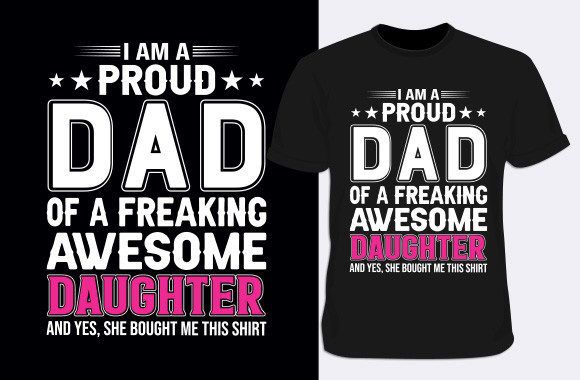
As an embroidery designer who has spent years digitizing and stitching thousands of motifs, I have learned that the emotional resonance of a design is just as critical as its technical execution. When I first pulled up I Am a Proud Dad of a Freaking Awesome, my initial reaction was not just about the aesthetic appeal, but about the specific market niche it occupies. This is not a subtle, minimalist piece; it is a bold declaration. For those of us in the craft business, understanding how such a statement piece translates from a digital file to a tangible, stitched product is essential for maintaining professional standards and customer satisfaction.
First Impressions and Visual Personality
The phrase itself carries a distinct mood. It is casual, enthusiastic, and unapologetically proud. Visually, this type of T-Shirt Designs asset relies heavily on typography and layout balance. In my review of the provided files, which include a print-ready PNG with a transparent background, an editable AI file, and an EPS file compatible with Adobe Illustrator CS6, I looked immediately for clarity. The design needs to hold its own against the texture of fabric. When evaluating Graphics for embroidery, I always ask: will the lettering remain legible once converted into thread?
The layout suggests a design that works best when given enough space. It is not a tiny accent piece. It demands attention. This makes it ideal for central chest placements on adult garments or full-front designs on tote bags. The personality of the design is friendly and approachable, targeting a demographic that values humor and familial pride. It fits naturally into the category of personalized gifts that are meant to be worn and shown off, rather than kept hidden in a closet.
Real-World Application: The Sweatshirt Test
To truly evaluate I Am a Proud Dad of a Freaking Awesome, I imagined a real-life scenario involving a custom order for a local dad who wanted a unique gift for his daughter’s birthday. He requested a high-quality sweatshirt embroidery. This is a common request in my studio, and it presents specific challenges. Sweatshirts are thick, often fleecy, and can distort if the stitch density is too high or the stabilizer is incorrect.
Using the vector files provided, I could adjust the scale to fit a standard 5x7 or 6x10 hoop comfortably. The transparency of the PNG allows for quick mockups, which is crucial for showing clients how the design will look on different colored fabrics. However, for actual production, the vector data is superior. It allows me to trace the outlines precisely for digitizing. If you are using this as a pre-digitized machine embroidery design, you must ensure the stitch types match the fabric weight. For a sweatshirt, a combination of satin stitch for borders and fill stitch for larger areas usually provides the best coverage without excessive bulk.
Considerations for Fabric and Texture
One of the most critical aspects of using this design is fabric selection. The bold nature of the text means it can handle some texture, but there are limits. On thin or stretchy fabrics, such as lightweight t-shirts or jersey knits, the design requires a cut-away stabilizer to prevent puckering. If the stitch density is too high for the fabric, the garment will warp, ruining the professional look of the finished product. I always advise testing the design on scrap fabric first. This simple step saves hours of frustration and ensures that the thread colors contrast well with the background material.
For dark fabrics, you may need to adjust the underlay stitches or use a lighter thread color for the outline to ensure readability. The design’s effectiveness relies on the clarity of the message. If the threads blend into the fabric, the impact is lost. Conversely, on light fabrics, ensure that the bobbin thread does not show through, which can happen if the tension is not calibrated correctly.
Commercial Viability for Etsy Sellers and Makers
For Etsy sellers and small shop owners, I Am a Proud Dad of a Freaking Awesome represents a strong commercial opportunity. Father’s Day, birthdays, and family reunions are peak seasons for this type of apparel. The design’s versatility allows it to be used on various products beyond t-shirts. Consider embroidered patches, which are currently trending. A patch allows the customer to apply the design to multiple items, increasing the perceived value. Alternatively, this design would look striking on a canvas tote bag, where the flat surface supports detailed stitching without the curvature issues found on caps.
However, caution is needed when applying this to curved surfaces like baseball caps. The text length may require a larger hoop or a specialized cap frame. If the design is too wide, it may wrap around the curve, distorting the letters. In such cases, scaling down the design or breaking it into two lines might be necessary, though this depends on the original digitizing. Always check the recommended hoop size before committing to a project.
Enhancing Brand Consistency and Trust
Using high-quality assets like this contributes to brand consistency. When customers receive a product where the stitching is clean, the threads are vibrant, and the design is centered perfectly, their trust in your craft business grows. This design, with its clear message, helps create an emotional connection. It is not just a shirt; it is a badge of honor for a dad. This emotional resonance drives buyer engagement and encourages social sharing, which is invaluable for small business marketing.
When creating printable mockups or digital product previews, use the transparent PNG to overlay the design on realistic product images. This helps customers visualize the final result. Ensure that your mockups reflect the actual stitch texture if you are selling finished embroidered items, rather than printed approximations. Transparency in presentation builds credibility.
Technical Notes for Embroidery Designers
Before running this design on your machine, there are several practical steps to take. First, verify the license terms. While the product description mentions editable AI and EPS files, it is crucial to confirm whether the license allows for commercial use of the finished embroidered items. Most digital embroidery files permit this, but restrictions may apply to reselling the digital file itself. Always read the specific license agreement provided by the creator.
- Test Stitching: Always run a test on similar fabric to check for registration issues.
- Thread Contrast: Choose thread colors that stand out against the fabric background.
- Stabilizer Selection: Use cut-away stabilizer for stretchy fabrics and tear-away for stable woven fabrics.
- Hoop Size: Confirm the design dimensions fit your available hoops without resizing excessively.
- Density Check: Ensure the stitch density is appropriate for the fabric weight to avoid stiffness.
In conclusion, I Am a Proud Dad of a Freaking Awesome is a robust asset for designers and makers who understand the nuances of embroidery production. It offers a blend of emotional appeal and visual boldness that performs well on a variety of garments and accessories. By paying attention to fabric choice, stabilizer use, and proper digitizing practices, you can transform this digital file into a high-quality handmade product that resonates with customers. Whether you are creating a personalized gift or stocking your online shop, this design holds significant potential when executed with care and professional insight.