Quit Talking Began Doing: A Designer’s Embroidery Review
As an embroidery designer who has spent years digitizing motifs and testing them on everything from thick terry cloth to delicate silk, I have learned that a design’s digital preview rarely tells the whole story. When I first encountered Quit Talking Began Doing, my initial reaction was not just about the typography or the layout, but about the attitude it projects. This is not a passive decoration; it is a statement piece. For those of us in the craft business, finding assets that bridge the gap between trendy aesthetics and technical stitchability is a constant challenge. This review breaks down how this specific graphic performs when translated from a flat Print Template into a tangible, stitched reality.
The Visual Personality and First Impressions
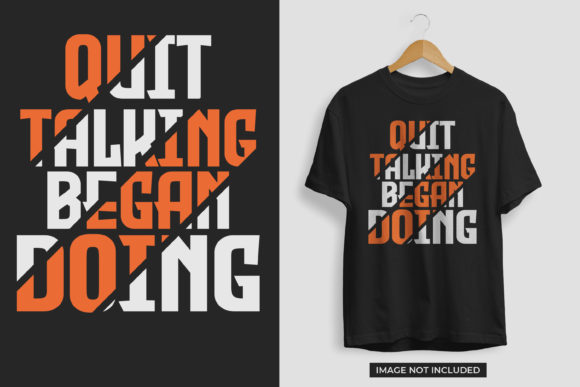
The phrase "Quit Talking Began Doing" carries a rugged, no-nonsense energy. Visually, the design relies on strong, bold lettering that demands attention. In the context of Graphics and digital clip art, it appears clean and vector-sharp. However, as an embroiderer, my mind immediately jumps to stitch types. Bold fonts like these are ideal candidates for satin stitches or dense fill stitches, provided the digitizing respects the natural flow of the thread. The mood is motivational yet grounded, making it a perfect fit for gym wear, workshop aprons, or office decor that leans into productivity culture. It does not feel frivolous; it feels functional, which is a rare and valuable trait in modern embroidery designs.
Real-World Application: The Workshop Apron Scenario
To truly evaluate Quit Talking Began Doing, I imagined a specific real-life scenario: creating a custom embroidered apron for a local woodworking shop owner. This is a classic use case for this type of motivational text. The apron fabric is likely a heavy-duty canvas or denim, which provides a stable base for embroidery. Here, the design shines. The boldness of the letters ensures that the text remains legible even from a distance, which is crucial for branding or personal identification in a busy workshop environment.
When stitching this onto a textured fabric like canvas, the contrast between the thread and the material becomes paramount. I would recommend using high-sheen polyester threads to make the letters pop against the matte background of the apron. The design’s simplicity allows it to stand out without needing excessive decorative elements like flowers or swirls, which might clutter the message. This clarity enhances the perceived value of the handmade product, signaling professionalism and attention to detail.
Versatility Across Different Products
Beyond aprons, this design has significant potential across various categories. For custom apparel, such as sweatshirts or hoodies, the design works well on the chest or back. The motivational nature of the text aligns perfectly with fitness communities or entrepreneurial circles. If you are an Etsy seller looking to expand your small shop product line, consider applying this to tote bags. A canvas tote with this phrase stitched in a contrasting color becomes an instant conversation starter and a practical accessory for students or professionals.
However, caution is needed when scaling. While the design is versatile, it may not translate well to very small items like baby clothes unless significantly simplified. The intricate connections between letters in some font styles can become lost if the hoop size is too small or if the stitch density is too high for delicate fabrics. For baby embroidery, I would advise checking if a simplified version exists or adjusting the digitizing to use lighter fill stitches to prevent puckering on soft knits.
Technical Considerations for Stitching Success
Transitioning from a digital file to a physical stitch requires careful planning. Since Quit Talking Began Doing is described as a digital clip art file suitable for cut machines and printing, it is essential to verify if you have a proper machine embroidery design file format (such as PES, DST, or JEF) before loading it into your machine. If you are converting the graphic yourself, pay close attention to the underlay stitches. A strong underlay is critical for bold text to ensure the letters sit flat and do not shift during washing.
Stitch density is another critical factor. Heavy fill stitches can make fabric stiff and prone to puckering, especially on thinner materials like t-shirts. I recommend running a test stitch-out on scrap fabric similar to your final project. Check for thread breaks, particularly in tight corners or sharp angles of the letters. Using a quality stabilizer is non-negotiable here; a cut-away stabilizer is often best for garments that will be washed frequently, while a tear-away might suffice for decorative items like pillow covers that see less wear.
Fabric and Thread Selection
- Dark Fabrics: If stitching on black or navy, ensure your thread colors have high visibility. Neon or metallic threads can add a modern twist to the motivational theme.
- Stretchy Fabrics: For hats or performance wear, use a flexible stabilizer and consider reducing stitch density to maintain the fabric's stretch.
- Textured Fabrics: On towels or fleece, use a topping to prevent stitches from sinking into the pile, ensuring the text remains crisp and readable.
Commercial Viability and Brand Consistency
For commercial embroidery projects, consistency is key. Quit Talking Began Doing offers a consistent visual identity that can be replicated across multiple products. Whether you are creating a line of embroidered patches for a corporate team or personalized gifts for a wedding party, the design’s straightforward aesthetic lends itself to professional presentation. Buyers engage with clear, confident messaging, and this design delivers that without ambiguity.
When listing this as a digital embroidery file or selling finished goods, transparency about the source and licensing is vital. Always confirm whether the license allows for commercial use of the finished product. Many buyers look for unique, high-quality designs that elevate their brand, and this motif fits that bill by offering a modern, assertive look that stands out in a saturated market of generic floral or script designs.
Final Verdict for Makers and Designers
In conclusion, Quit Talking Began Doing is a robust choice for designers who value clarity and impact. It is not just a graphic; it is a tool for communication. While it requires thoughtful digitizing and material selection to achieve the best results, its versatility across apparel, home decor, and accessories makes it a valuable addition to any creator’s library. By respecting the technical limits of embroidery—such as hoop size, stabilizer choice, and thread tension—you can transform this digital asset into a high-quality finished product that resonates with customers. Remember to always test on scrap fabric first, and let the boldness of the message guide your creative decisions.